Follow the adventures of one fearless little explorer as she discovers the wonders Australia has to offer.

Saturday, August 17, 2013

Josephine Falls, Queensland

On the way north from Townsville to Cairns we stopped at a beautiful little national park set back into the hills behind the sugar cane fields- Josephine Falls. While the water looked too cold for us there were plenty of hardy, albeit younger, people taking their chances. (There were plenty of warning signs, stating that people had been killed or seriously injured as the river can rise at any time, the stream is cold and rocks slippery! Flash flood are common!) The walk in through lush tropic rainforest was delightful and Amelia thoroughly enjoyed stretching her legs and running ahead on the excellent paths.


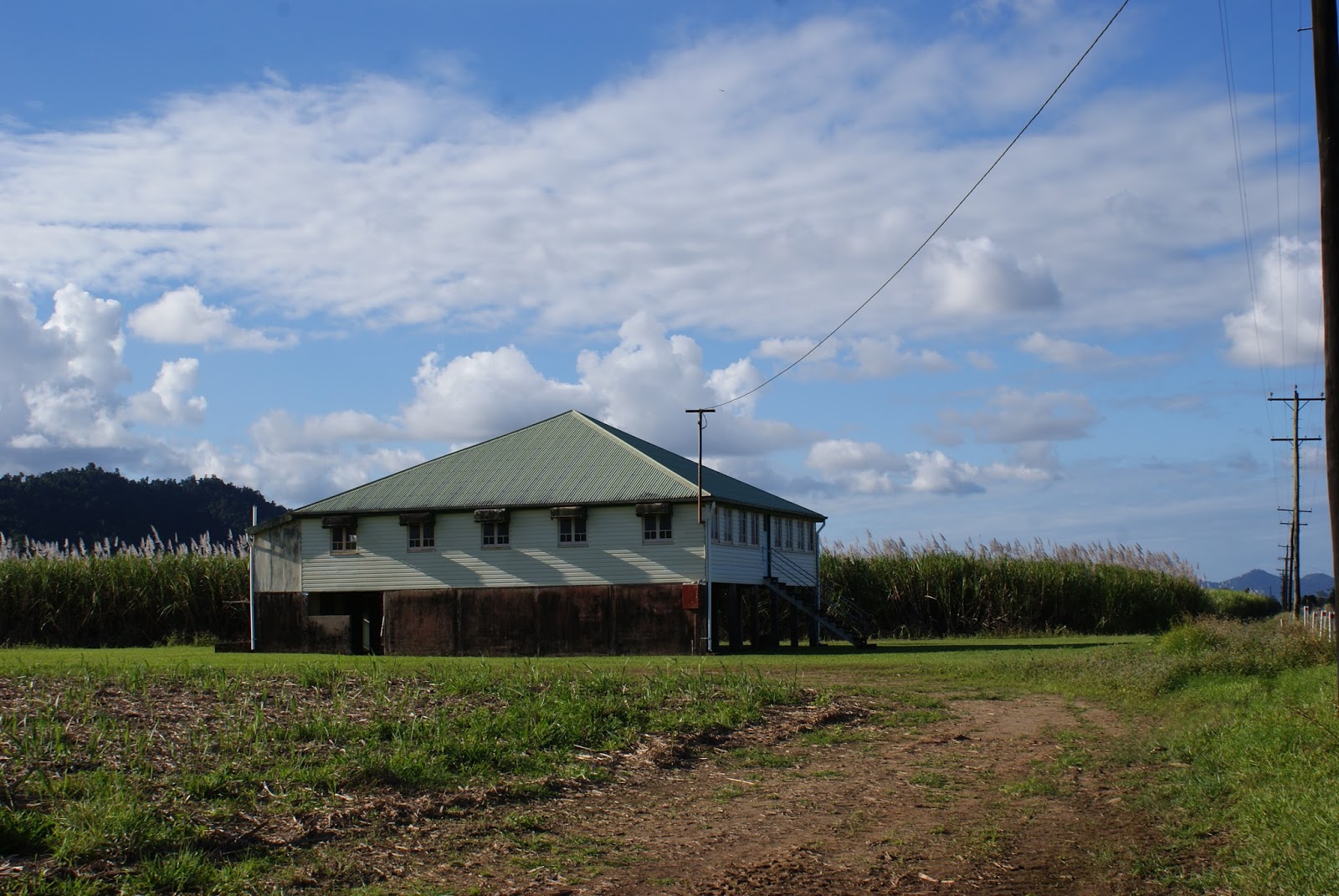
Typical "Queenslander" house, with plenty of height for air circulation

 Harvesting


 Slippery rocks

A few brave souls testing the water!


Josephine Falls on Mount Bartle Frere has special significance to the aboriginal people of the area; the Noonguynbudda Ngadjon-jii, particularly due to the convenience of seasonal food sources and fresh water. Gungas (shelters) were made of palm fronds, ginger leaves and branches. Life for these people traditionally revolved around the seasons, the animals and the forests although this was interrupted when Europeans arrived. This place is considered their spiritual home and they moved around the mountainside regularly. The noticeboards were informative and explained the commitment of the Noonguynbudda Ngadjon-jii to the land and seasons...

Our people ate nuts, fruit, tubers, fish, scrub turkeys, eggs, possums and carpet snakes. They buried nuts underground at camps when there were plenty around and dug them up when they were out of season.”

“Our people knew what time of year to eat wildlife, when they were fat enough to eat and not breeding. Everything was centred around the seasons. In the time of the jigaru (thunderstorms), moongarra (Australian bush turkeys/ scrub turkeys) began nesting  and everybody looked forward to a change of diet to bumboo (turkey eggs). When certain trees flowered it was time to catch fish, Our people knew about food by reading the seasons”

“When the men went hunting, they always asked permission of the animal spirits first before killing animals for food. They only took what they needed. All families had animal totems they wouldn’t hunt. Our old people never killed animals in their breeding season and never killed female animals”

It rains here about 250 days a year resulting in between 5-8 metres annually and at times 12 metres on the summit. This was evident on the day we arrived as the cloud obscured our view of the summit and it was much cooler than Townville or Cairns.


Mount Bartle Frere was named in 1873, after the then president of the Geographical Society in London. Shortly after Palmerston (explorer and prospector) and his associates discovered gold on the upper Russell river and its tributaries, prompting a short gold rush. (The gold has hard to find and conditions harsh). Many miners left after a short time, few with decent findings. From the turn of the 20th century, industry took over, with mining, agriculture, farming and timber harvesting dominating traditional lands. The early settlers thought of the land as hostile jungle and wanted to “put it to good use”. Many of the traditional owners moved in the western parts of their lands, while some gained employment as miners, farmers or timber workers, while the women went into domestic services. Attitudes slowly changed and in 1921, parts of the Bellender Ker Range, including Mt Bartle Frere were declared national park.

 Top pool

Wednesday, August 14, 2013

Porcupine Gorge, Queensland

The 27 km long gorge stretches 120 metres into the earth and 200 million years worth of geological history is revealed. Some time ago, the earth here was pushed upwards and between six and two million years ago it was covered by sheets of basalt and lava that had erupted from a series of small volcanoes- perhaps from Mount Desolation (an extinct volcano) nearby. The basalt formed a hard cap over the elevated land surface.


Porcupine Creek (a tributary of Queensland’s longest river- the Flinders) then eroded through the basalt and finding softer rock underneath, proceeding to cut down to its current level. The hard basalt on the edges preventing them from eroding, and a gorge was created. In the “gutter” you can still see the sandstone eroding now. There are different layers on sandstone evident in the walls of the gorge today and many huge holes where smaller rocks have circulated during the wet season to form circular gouges. Porcupine Creek is a permanent water source for many native flora and fauna, including echidna, geckos and wallaroos and galahs.

It was a rocky path in, steep in parts and a bit challenging for young legs but so worth it. 

First up is the view from the lookout...


The smooth sandstone floor, rising red, brown and white cliffs and clear river was fascinating and simply stunning. We did think we saw some tiny fish but couldn't be certain.


Okay- some of the water was not fresh, nor flowing, but the algae was flourishing!


Amazing rock formations, smooth and yet pocked with holes (some quite deep) often with stones and sometimes sticks and chunks of wood inside.


On the steep ascent we learnt the value of storytelling and two of Aesop's fables and an epic version of Hansel and Gretel were made to last the entire climb, and not one complaint was heard from Amelia. 
Woo-hoo!


Friday, August 9, 2013

Dinosaurs anyone? Richmond, Queensland

We had no idea that Australia has such a rich dinosaur history, apart from the obviously named Dinosaur Cove down in Victoria, that is. We were so surprised to find Kronosaurus Korner and further fuel the fascination that Amelia has for fossils. (And her mother some would say! ;)

Kronosaurus Korner, located in Richmond, Queensland (despite the off-putting spelling) was simply brilliant. The town Richmond is about 400 kms east of Mt Isa which was where we had to stay for a few days. I haven't taken any photos in Mount Isa, the mining town as we weren't able to do much touristy activities given Amelia was too young. But I made up for the in Richmond with numerous photos of the spectacular fossils and dinosaur remains, some dating back 100 million years. Amelia was in her element, racing around the museum excitedly, only slowing down to listen to the audio guide every now and then. She was particularly impressed with the children's corner where she was able to play at palentology and uncover her own dinosaur skeleton. The musuem is well placed in the middle of an impressive area for fossils and is still a working laboratory, with regular digs and archeological work being undertaken to restore items discovered.

The best part of all is the way the general public has been involved in the entire musuem, with regular station owners finding fossils on their land in the course of their daily farming life. People are invited to partake in fossicking and share their finds with the "experts". In this post I'll endeavour to explain some of the more important finds...

At the entry is a giant lifesize model of the kronosaurus, a short necked pliosaur (a marine reptile) which was discovered nearby. A fascinating fact relating to the size of this monster is that it's teeth were 30 cms long- or about the size of a big banana.


This pliosaur fossil was discovered by a team from Harvard University from a site near Richmond in 1932. The tip of it's skull which was found is 54 cms in length, shown here against a crocodile skull indicating it's true size to be much larger. The complete skull is guessed to be 2 metres in length- he was huge! Twice the size of the skull of a Tyrannasaurus Rex. 


The pliosaur was a marine reptile having lived during the time when much of western Queensland was a shallow Cretaceous inland sea, approx. 120 million years ago. Only a few of these have been found, with many in the same area of Queensland. It was named Kronosaurus after the Greek God of the time, Kronos who ate his own children. The Australian kronosaurus lived for a long period of time, estimated at 16 million years so scientists believe there were probably many different species. Kronosaurus were also found in northern Columbia, South America. The contents of the stomach of the fossils recovered indicated their diet consisted of fish, large sharks, turtles and other marine creatures. 


The map showing where the inland sea was and the altered coastline.

The fossilised skeleton below is of an Ichthyosaur- or "fish lizard". The ichthyosaur was a dolphin like reptile that ruled the ocean during the age of the dinosaurs. They had large flippers and a tail like a shark and were very powerful swimmers. Their excellent eyesight enabled them to see clearly in the ocean depths and they fed on large squid like creatures and other fish. They lived in the sea 100 million years ago and grew to be 7 metres in length. This one was found nearby on the Sutherland cattle station, 100 kms north west of Richmond.


Also found in the area was an Elasmosaur- a long necked reptile with a smaller head than the kronosaurus. This animal would have been 8 metres long, with more than half that being the length of his neck. Many of the fossils found have been minus the head- which would easily have broken off over the years under the ground. 


Ammonities were another common find in the area- very similar to today's Nautilus. They are also related to the octopus and cuttlefish. They are easily recognised by their coiled shape and chambers within. The interesting thing is that only the chamber right next to the opening was occupied by the animal. As it grew, new chambers were created and the older ones filled with liquid and gas which enabled the animal to move up and down in the water. 

They were named after the ancient Egyptian God Ammon who was depicted as having horns on his head. The largest ammonite found was a big as a tractor tyre. They had eyes, jaws and tentacles, and could propel themselves through the water using a type of jet propulsion.


Turtles were also found in the Richmond area. The most common; Notochelone, is similar in size to today's green turtle. 


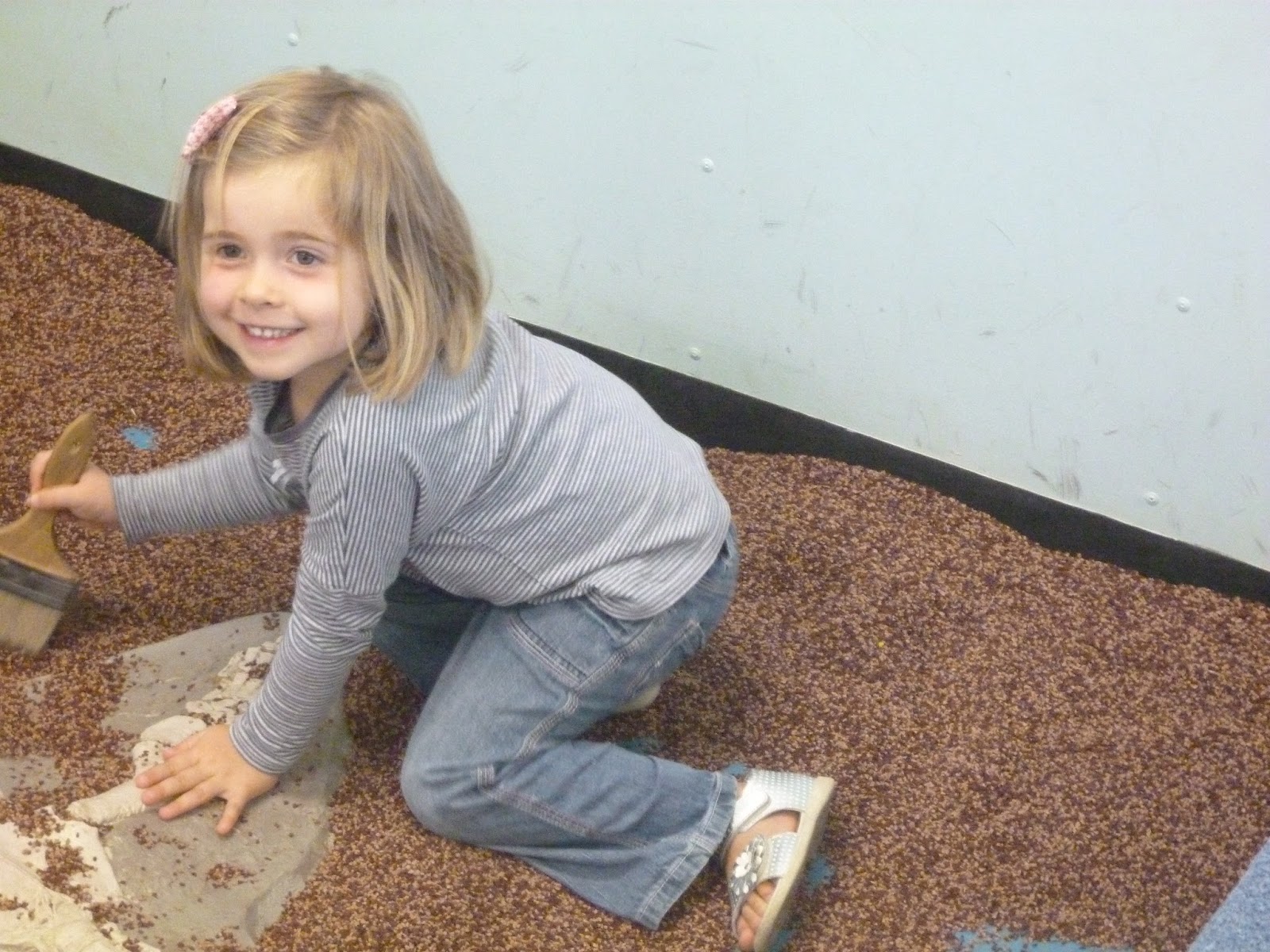
 Here's our little palaeontologist hard at work near the incredible laboratory.


Various fish fossils have been found in remarkably good condition...


Cooyoo Australis, which grew up to 3 metres long was a giant high speed predator


The next dinosaur we saw was called Minmi, who was land based and it lived about 100 million years ago.


 What Minmi would have looked like.

And the most well preserved giant pliosaur (not really a dinosaur- a marine reptile) was present.. It's on loan from QLD Museum and is considered an excellent specimen, having been relatively quickly buried in marine sediment and limestone. This one had been injured before death possibly by a kronosaurus, and has an injured flipper. It was most likely killed by a blow to the head

 I just found a little photobomber in the background of this shot!


As you can imagine we loved learning more about Australia's exciting dinosaur history and the day was a great success with Amelia. (We're also planning to visit the site of the largest known dinosaur stampede in the world- in Winton, just down the road)


Tuesday, July 30, 2013

Stuart Tree, near Daly Waters, NT


Heading south for the first time in what seems like forever we leave behind the big smoke and excitement of Darwin and the comfort of Katherine in the top end of NT and we find ourselves at a small town called Daly Waters. Daly Waters claim to fame dates back to the early Australian explorers and more recently the being the refuelling stop for early Qantas flights to Singapore. The areodrome was closed to commercial traffic in 1965 but the hangar is still standing abandoned. 

While the area's traditional owners, the Jingili people believe the area to be singificant because of Dreaming tracks caused by the emu and the sun, the town was actually given it's formal name in honour of the natural springs by by John McDouall Stuart at some point in his journey North from Adelaide to Darwin. He'd attempted the trip three times, finally being successful in May 1862. (On his first attempt he reached Tennant Creek, and his second took him further north, but third time lucky he actually made it!)

 Vandal?!


This is how the tree looks now, and apparently how it also looked in the 1940's judging from this photo of a tour group...


At the time Stuart wrote; "I named theseDaly Waters, in honour of his Excellency the Governor-in- Chief. Within 100 yards, the banks are thickly wooded with tall mulga and lancewood scrub; but to the east is open gum forest splendidly grassed."- Diary Entry 23rd May, 1862.

The initials apparently carved into the tree are very hard to spot (so many years have passed), and this photo shows what we thought could possibly have been the mark of the famous explorer/ eco-vandal! ;)


Relaxing after a hard day's driving at the Renner Springs Hotel with new friends...


Saturday, July 27, 2013

Learnings from the road


A few years back I inherited the task of writing for a weekly newsletter that included LIFE LESSONS. At the time I found it incredibly crazy (not to mention presumptious) to think of myself as qualified to give anyone something as important as a lesson in life. (Surely we're all just along for the ride doing our best!) And yet here I am, about to write a post that could definately be construed as a bunch of warnings or lessons in what not to do. Maybe that's what I should call it- what not to do on the road. Regardless of the title- this post is just that- a bunch of ideas and learnings that we've noticed since beginning this epic trip. I imagine this list to be by no means exhaustive and will be added to along the way. Enjoy!

Never take camping recommendations from random strangers- Lee Point Caravan Park in Darwin is just one example! The sandflies were horrendous, poor Amelia looked like a measles or chicken-pox victim after just one night, and the rest of the park offerings unmentionable. It took weeks (and some special Pharmacy cream for them to heal)

Bring your chequebook! It is possible to pay more than $2 a litre for fuel; $2.09 at the Barkly Roadhouse, NT. It's just expected in the outback. The same goes for a cooked meal- who would have thought $28 for sausages and mash was reasonable? And finding real coffee is a great challenge!

Don't book campsites online- always check the place out before you commit to a certain site- Purnululu is an excellent example of this (Amelia- heatstroke, Tara- grumpypants and the store sold out of cool drinks!) Shady campsites are very important! As are sites when it's windy. Speed Point, SA was horrid for this reason- the sand grit on my scalp and pillow each night were not endearing. Try to drive through before booking at the office- although in Hughenden, QL, this approach was met with a stern telling off- almost enough to make me want to turn around. In other camps we've been encouraged to do this and even given a map- Kakadu just one example. 

Try and mix it with the locals. The Country Music Festival at Hughenden was great, a bit different to what we've used to, but an excellent example of the charm of small country towns. Country folk are generally friendly and able to give you great info and tips (take with a grain of salt), even if they just let you know when the bottle shop is closed. 

Plan ahead with your supplies. Many towns do not have a supermarket open on the weekends (or just open on Saturday mornings) so it's always a good idea to be prepared and check times. Otherwise maybe a dinner out is just as good. Again- expect to pay more for the convenience of whatever it is that you absolutely must have that you didn't know you needed until now. Surely blue castello is a necessity?!

Get into that camp kitchen and save your gas. We've met so many lovely folk from all about the place. One fellow, Ged from Casterton we met in Katherine and he's bravely riding around Australia on a push bike. He was such a lovely fellow, full of interesting stories and fun. Quite the artist; he did a few drawings for Amelia which she then turned into complete collage artworks using her art folder. Hi Ged if you're reading this. Other folk have included a family from Adelaide, a lady from Moriac and funnily enough two seperate couples from St Arnaud, Victoria. We make sure to complement them on the fine INDIAN restuarant they have in town. 

Again on financial matters- expect to pay more in certain areas for your patch of grass- the Kimberley, NT and touristy areas especially. In Mt Isa- where we had to stop for a two days we were charged $84 dollars for an unpowered site which was delightfully located between a rubbish skip and a pile of bark chips with dusty paddocks next door and freeway noise a constant. Especially annoying given that Chris was quoted $62 but when I went to pay the same woman apparently decided to value add. Mt Isa was exceptionally busy and the tourist information centre (unlike the brilliant service offered in Western Australia and Northern Territory) was not able to assist us in finding accomodation aside from handing over a free map of the town. When we did the rounds of hotels, motels and caravan parks everywhere was fully booked out. Yet another town like Port Headland and Broome where seasonal workers fill all the short term accomodation. And the park we stayed in was a BIG 4/ Discovery Park- so I guess the price is to be expected- but this time without the jumping pillow or children's playground! Not impressed!

EDITED TO ADD: $50 a night for a site in a campground near Yeppoon, Queensland, but that includes power, a playground, pool and jumping pillow!

When bush camping be prepared to stake your claim. During winter there are millions of grey nomads and other caravanning folk on the roads- everywhere. They like the free camps and often clog up the roadside stops with their huge vehicles as though they were parked in a caravan park. Well, when you do find a great campsite and you are in a tent this causes an issue. A note to those travelling in a van or camper- Tents do not have inbuilt toilets and showers! Caravans do, but seem to have no problem at all in parking right next to tents when there is plenty of room to be had- and not one public toilet in sight. At Julia River, we had the priviledge of many, many well heeled neighbours who despite Amelia's loud protestations "But where's Mum going to wee?" chose to suffocate us with their fancy vans. Not that I'm jealous of the big guys- but seriously- give us some room! The problem was solved creatively- but there were a few stressful words to be had.

When in caravan parks be wary of where you are camped. In peak season, sites can be pretty close together and noise travels. For many nights we have been woken to sounds of people cooking in the camp kitchen (too close), elderly (seemingly DEAF!) people's televisions usually tuned to something boring or worse- football- and even the sweet sound of an angle grinder as permanent residents complete boat maintenance. The joys! I usualy try to keep Amelia quiet, but it's tough not to want to retaliate when people are so obvously inconsiderate. 

More on Caravan Parks...
Use the camp kitchen and save gas!
Same goes for TV.
Take advantage of freezers and freeze water bottles to put in fridge when you leave- it helps fridge keep temperature when you're back on the road. You can also do the same for other food items.

Must have items for the journey...
Babywipes
Tissues and/or paper towel
BUSHMANS (even though it strips nailpolish!) or any strong insect repellant
"Ockie" straps for securing tricky items
Extra rope and clothespegs
Patience! ;)