Follow the adventures of one fearless little explorer as she discovers the wonders Australia has to offer.
Showing posts with label the Daintree. Show all posts

Monday, September 16, 2013

More Daintree dreams

Cape Tribulation was as expected, beautiful, serene and pristine... but we still didn't find any new coconuts.


Cape Tribulation, also known as Kulki ( pronounced "gool-gee") is an area of significance for the Eastern Kulki Yalanji Aboriginal people because of its use as a meeting place and source of  food, medicine and tools. The natural features of the area add to its spiritual significance.

Cape Tribulation was named such in 1770 after Lieutenant James Cook experienced hardship  when his vessel was damaged on a nearby reef. Since European settlement the area has been used for mining, timber and farming, but is now mostly a tourist destination.

The forest itself is significant as many species which flourish now have a long history and give us information as to the evolution of today's flora and fauna. The Daintree is one of the oldest living rainforests in the world.


We enjoyed a great rainforest walk, which was complete with many excellent signs and information boards, informing us all about the flora and fauna within the park. Some of the huge strangler trees/vines were amazing, as were the mangrove root systems, and understanding how animals and plants live in such a complex ecosystem was fantastic. Here are some images from the walk.


Many species of cycads (and other wet tropical rainforest plants) haven't changed much since they were around 230million years ago. 


Named for their spectacular pleated fronds, fan palms are found in wet rainforests from Cape York to the Paluma Range. While few plants are able to survive in oxygen poor, waterlogged soil, fan palm thrive. Their shallow roots allow them to absorb surface water and nutrients easily. They are also great absorbers of sunlight, with fronds that can grow up to 2 metres in diameter they reach 15-20 metres into the canopy and can capture the sunlight essential for their growth. 


Basket ferns grow on tree trunks or rocks, capturing nutrients from above to survive. They have two distinct types of fronds, the long green fronds carry the spores for reproduction and photosynthesis and the short brown fronds protect the root system and collect debris (nutrition for the plant). Home to birds, frogs, snakes and insects, sometimes other plants even germinate in the baskets.


The buttress roots of the looking glass mangrove allow the tree to stand tall in soft oxygen deficient mud. Special cells on the buttress also help the tree to breathe. They can only tolerate a little salt so are usually found where mangroves and rainforest merge.



Cassowaries are essential to many rainforest species as they spread seeds and assist in germination. Research has shown that one plant- the Ryparosa Kurrangii seeds that pass through the gut of a cassowary have a 92 percent chance of germination. So the survival of this plant species is dependant on the survival of the endangered cassowary.


Sunday, September 1, 2013

The magnificent Daintree Rainforest

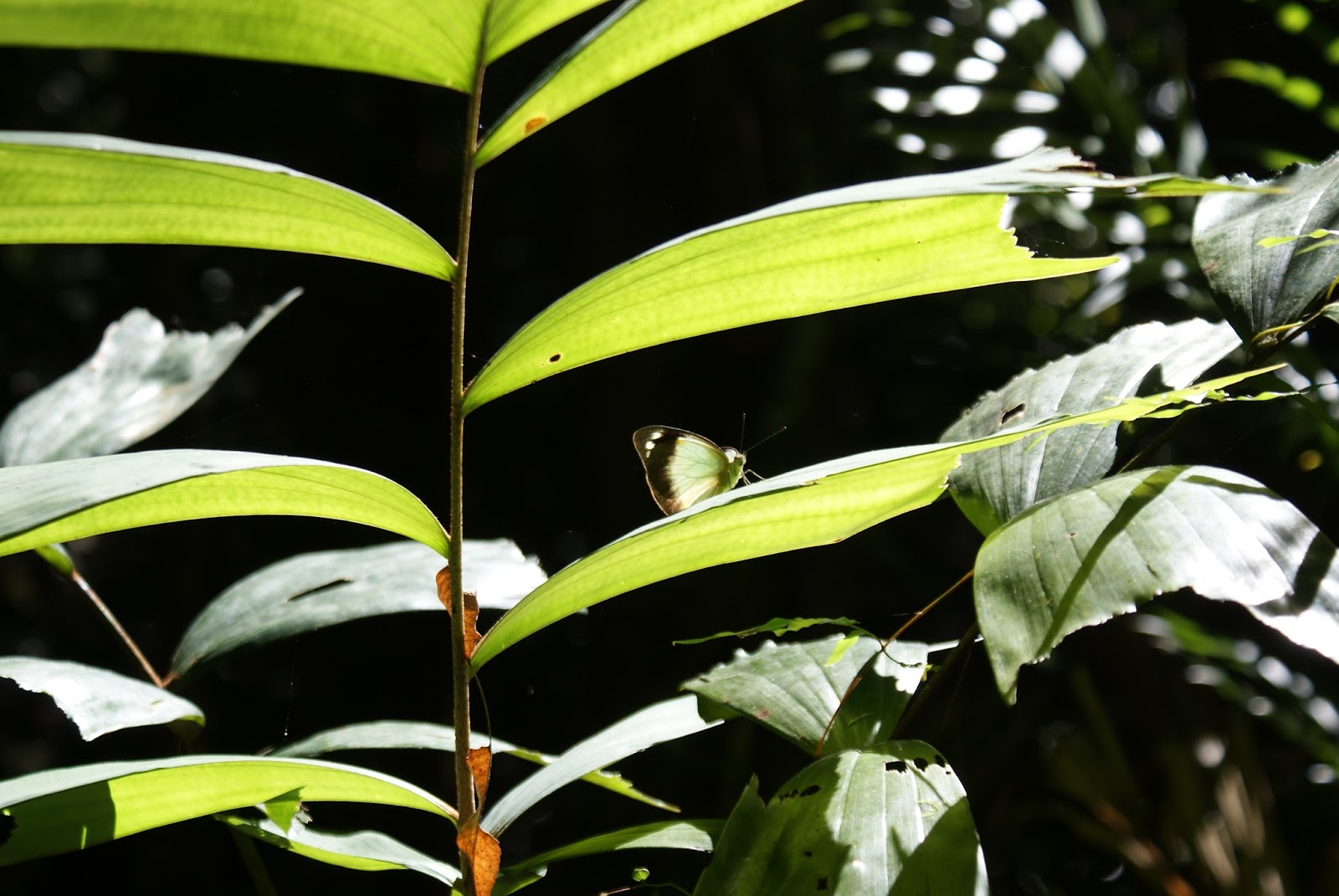
What a stunning place, lush greenery, exotic palms, fascinating butterflies and birds (we love the bush turkeys), pristine beaches, great weather... the list goes on. The area is the largest continuous tropical rainforest in Australia and classified as a World Heritage Site of great siginficance. The rainforest grows right down to the sea and the mangroves thriving in the silty shallows. 

A short ferry ride took us over the Daintree River and into the forest area, which is now quite habitated, with various accomodation choices available. We stayed in a caravan park, mixing it with so many different nationalities that few of our neighbours were able to speak English as a first language. We were right on the beach and a fun rope swing kept Amelia entertained for a while. Between swinging and searching for shells and virgin coconuts we were certainly occupied.

Crossing the Daintree River heading North-


The first beach (Cape Kimberley) we came to was almost deserted and perfect for exploring-


View from the Mount Alexandra Lookout-


Driving further North we came across the Jindalba boardwalk, which runs through tropical lowland rainforest. Interesting facts on the rainforest include that up to 10 tonnes per hectare of leaves and branches fall each year from the canopy and this is quickly broken down into nutrients. This allows large trees to grow in poor soil. And boy do they grow tall! 


In the "basement" or root system live many other plants, animals and microorganisms- worms, fungi, tiny soil creatures. In the canopy live butterflies, spiders, orchids, ferns and many different bird species. 


Rainforest trees use many different ways to get to the light. Some grow slowly, some just wait til a tree falls and then grow super fast to make the most of the break in the canopy and others hitch a ride, starting at the top and sending their roots down to the forest flow. 


Jindalba is the Kuku Yalanji name for this area, which has been flourishing for more than 135 million years. It's all a bit of a miracle really given the conditions for growth being at times so challenging. Life in the wet tropics include challenges such as cyclones, high rainfall, intense sunlight (upper canopy), soils leached of nutrients and intense competition for light and food. As you can see many plants have developed clever ways of coping. 


The trees make their food using sunlight, nutrients and water. The canopy is an interlocking network of sun hungry trees, which is so efficient that less than 15% of sunlight actually reaches the forest floor. 


Rainforests are called closed ecosystems because their living parts; plants, animals and microorganisms are totally integrated. If this dynamic is destroyed by fire, erosion or clearing, nutrients are lost and not recycled. Extensively damaged rainforest may never return to its pristine state. But when conditions are right, rainforests are rapid colonisersm advancing around a metre annually. 


This amazing staghorn fern is dangling by the slightest of cords, can you see it in the middle of the photo?


Tropical rainforest needs at least 2 metres of rain a year to thrive. Much of this never reaches the forest floor, evaporating in the canopy or collecting in hollows. The rest drips off leaves or cascades down trunks, but the leaves need lots of water (along with soil nutrients) to make sugar. During summer, when sunlight is intense, evaporation is high and soils are saturated, a giant rainforest tree can pump hundreds of litres of water from the soil into the canopy. 

 blurry but so cute!


Circular Palm Ferns, which grow to amazing heights.


The rainforest canopy is an enormous solar panel of hungry leaves. These tilt to the most sun catching angle throughout the day. The leaves themselves are sugar factories, chorophyll converts the sun's energy, splitting water and carbon dioxide to make glucose (sugar). This fuels the plant and is the building block of cellulose from which the trunks, branches, leaves, fruits and flowers are built. In this rainforest area, a few large trees take up 80% of the sunlight. The surrounding undergrowth is reasonably clear as few plants can survive in such low light. 

Daintree Tea leaves farmed just up the road growing beautifully...


Right next to our tent is the short walk down to the the you know what!


 Another swing was required before breakfast


Had to include some photos of these impressive creatures scratching around the campground...
They cleaned out coconuts in record time and had a dominant bird which became possesive of the food source and proceeded to scare away any other birds which dared to sample the fresh coconut.

These sratch around in the leaf litter for materials with which to build their nests and for food; fruits, seeds, insects and snails. Using their strong legs they rake decaying matter into piles and lay their eggs within, where the heat from the matter decaying and microorganisms slowly rot the vegetation and the heat generated incubates the eggs. The scrubfowl carefully check the temperature of the mound and remove or add material to maintain a 30-35 degree temperature. 


And the artists impression of the bush turkeys/ scrub fowl...