Monkey Mia Reserve
Situated in Shark Bay this is definitely a targeted tourism area- and often listed as one of the "must dos" when in Northern WA and it didn't disappoint. The area is just delightful, crystal clear waters, amazing sunsets, clean white sand, and the dolphins simply magical. The bottlenose dolphins have been visiting the areas since the early 1960's when a local personality first began feeding them. The reserve (and dolphin interactions) are now carefully managed by the Department of Environment and Conservation.
We stayed in the little town of Denham to avoid the over touristsy (and overpriced) Monkey Mia Resort and we found it worked for our family. While the caravan park we stayed in was not at all sitable for children (hardly any grass, all rocky and minus any semblance of a playground) the main street and foreshore area of Denham was great with a playground and plenty of room to run. Apparently the stingers are still in the area so we were unable to swim.
Little Lagoon
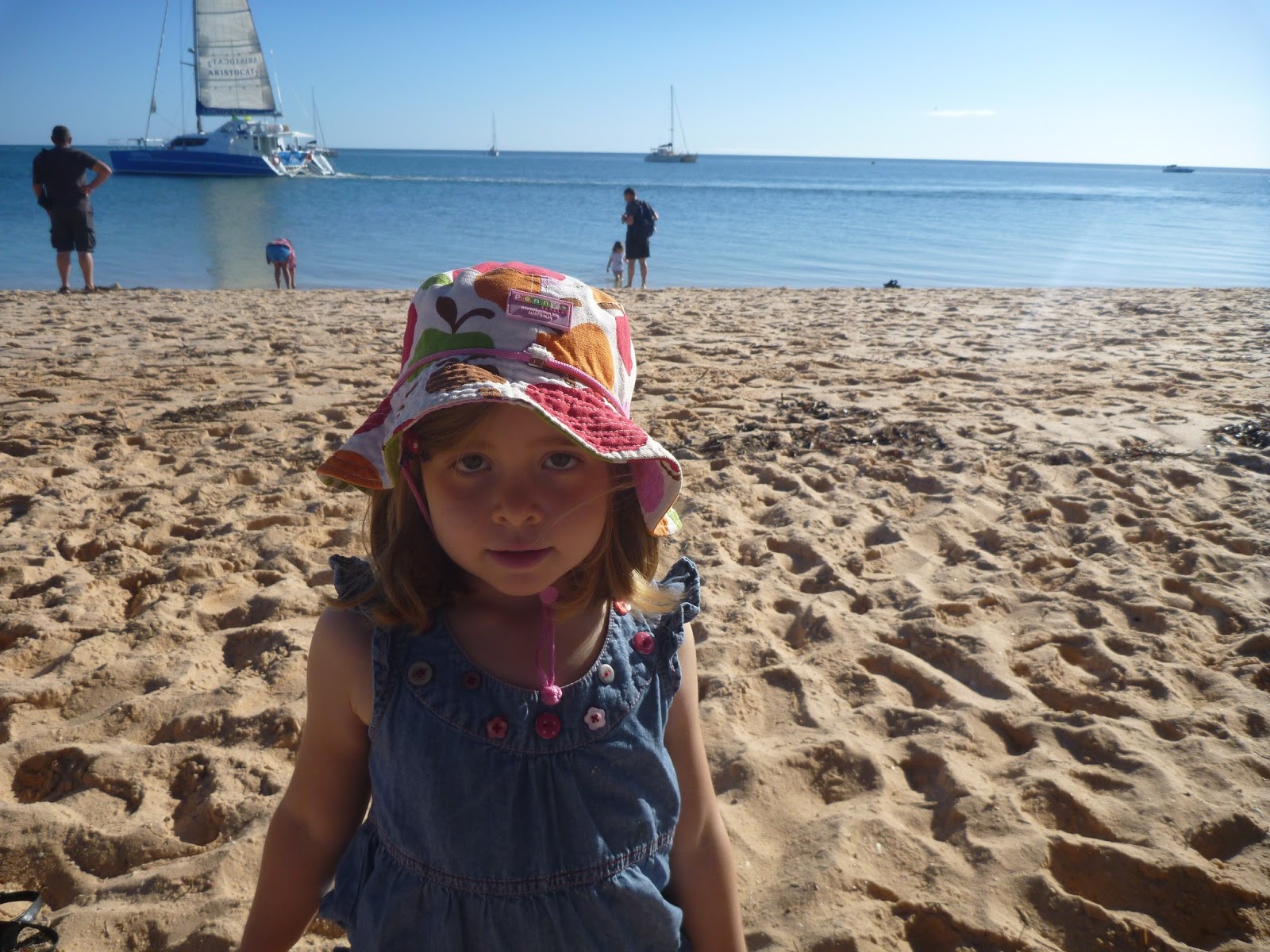
Amelia did have a paddle at a wonderfully secluded waterway called "Little Lagoon" just out of town although linked through the mangroves to the sea. Easily assessible by 4WD we had a little shelter all to ourselves and once Chris had checked for stonefish we got to paddle.
Monkey Mia Reserve Dolphin Feeding
The daily dolphin feeding begins at around 7.45am and there are three scheduled feedings a day- although the times are flexible as the dolphins don't always attend on time. We (and around 60 others) waited patiently on the beach for almost 45 minutes before a sighting and then went through the process. Lead by the National Parks staff we exited the water and waited for more dolphins to appear before re-entering the water and feeding the dolphins with the aid of volunteers (mostly young international travelers). Each dolphin was identified as they came closer and their number of fish counted and weighed. The feeding is designed to supplement the dolphins' diet and provide only 10% of their daily needs. It also has to be done quickly as the nursing mothers leave their young out in the deeper water and they require milk every 7 minutes. How's that for attachment parenting?
The crowd gathered at the first sighting. 5 dolphins fed the first time, then four attended the second feeding.
One of the four volunteers. One also has to have a "dummy" fish bucket higher up on the beach to distract the pelicans and allow the dolphins time to eat.
Getting bored- making sandcastles
The presentation was informative and interesting and filled in the waiting time quite well. A video was also shown and the information display great. We learnt from the obvious- don't wear sunscreen on your legs and then enter the water as it upsets the dolphins, to the more unknown- that dolphins can catch human diseases and colds (and the reverse is also true) so we need to avoid touching them and being in the path of the "blowholes". One handler even caught a nasty chest infection last month.
Surely she's reading my mind!

A memorable highlight!
Our trip to the local Aquarium/ Marine Park was also pretty informative and child friendly. We met Bob, a loggerhead turtle who'd been rescued as a youngster when he suffered flipper damage. He was amazing, although it was sad to see such a magnificent creature in a small tank. He will be released when he grows and becomes stronger and more capable.

Moray Eels

Squid
Amelia has developed a taste for calamari- the fried variety of these guys!

Fancy a grope(r)?

The impressive Zebra fish
Can you spot an eye and mouth on this friendly bloke?
Stonefish are actually quite social characters, preferring to look like their peers they are known to shed all their mucky growth and regrow it when moved to a new area- so they fit in with the pack.

Flathead
A lemon shark, ready to be fed as part of the hourly schedule- they weren't too hungry when we visited.
Lemon sharks have two fins of about the same size.
Clownfish- or "NEMO"
Bob- our favourite.